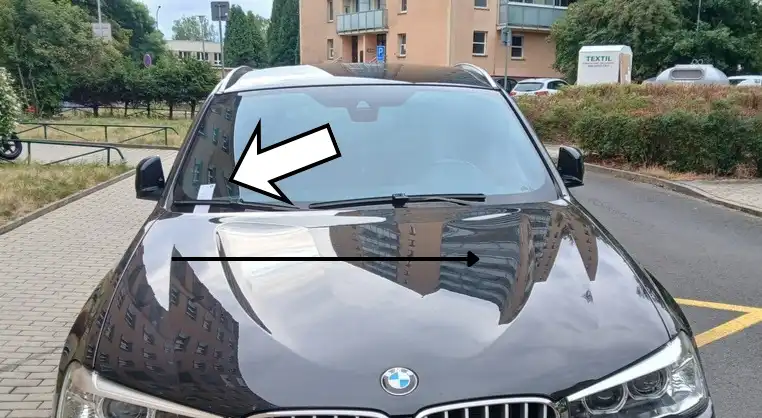
I have found a notice under my wiper
Step by step guidance if you find a notice under the wiper of your car.
Have you found a notice from the municipal police under your wiper?
You come back to your parked car and find a slip under the wiper that reads: “Notice to the absent offender who committed an offence by parking a motor vehicle”. You immediately start wondering what to do next.
First of all, please follow the instructions on the notice. The notice is addressed to the driver who committed the offence. That driver should come to Moskevská 34, Karlovy Vary, within fifteen days.
If you come to see us as the driver, please do so within the hours stated on the notice; at other times we may not be able to attend to you.
Opening hours: 8:00–11:30 and 12:30–17:00 every day (Mon–Sun).
Please bring with you:
- proof of identity (ID card, passport, residence permit, etc.)
- driving licence
- vehicle registration certificate
Report to the duty officer, who will either deal with the offence or refer you to a colleague from the offences unit. We will deal with the offence with you; the outcome may be an administrative penalty imposed as an on-the-spot fine under the applicable legislation, or a report of your offence to the administrative authority. If you do not respond to the notice, we will refer the matter to the administrative authority, which may, under the conditions laid down by law, pursue it further with the registered keeper of the vehicle as an offence of the vehicle keeper.
How an offence can be dealt with
Dealing with an offence by a municipal police officer
Almost any one of us may commit an offence at some point. On the one hand this does not make us criminals; on the other, we have to expect a possible penalty. Citizens should therefore be aware of certain aspects of how a municipal police officer deals with an offence.
- an officer may impose an on-the-spot fine for offences that fall within the competence of the municipality and for offences against order in public administration listed in § 91 odst. 2 písm. e) zák. č. 250/2016 Sb., o odpovědnosti za přestupky a řízení o nich (Act on Liability for Offences and Proceedings Thereon), as amended, or under another act (for example § 124 odst. 13 zák. č. 361/2000 Sb., o provozu na pozemních komunikacích (Road Traffic Act), as amended, or § 43 odst. 4 zák. č. 13/1997 Sb., o pozemních komunikacích (Roads Act), as amended). All other offences detected are referred ex officio to the competent administrative authority;
- if the offender disputes the offence, it cannot be settled on the spot. The officer must refer it to the competent administrative authority. The officer must also do so ex officio in the case of other offences that may not be settled on the spot by an on-the-spot fine (a substantial speeding offence, offences relating to firearms and ammunition, offences under the act on identity cards and similar);
- an officer may impose an on-the-spot fine of up to CZK 10,000, unless the law sets a lower amount (for example, exceeding the urban speed limit by less than 20 km/h carries a fine of up to CZK 1,000).
- if the offender is aware of the offence and agrees to pay the fine, they may pay in cash. If they do not have enough cash, they may pay by card, or have a fine ticket issued for payment later. Please note that by signing, the offender confirms their agreement with the way the case is settled and with the amount of the fine, which means that there is no appeal against the fine and that, if it is not paid, it will be enforced;
- if the offender refuses to sign the fine ticket, the summary administrative procedure cannot be completed and the offence must be reported to the administrative authority.
- although the law leaves the amount of the administrative penalty to the officer, they must always take the following into account:
- the seriousness of the offence
- the way the offence was committed
- the consequences of the offence
- the circumstances in which it was committed
- the degree of fault
- the motives and the person of the offender
Please bear in mind that in dealing with an offence the officer is only doing their legal duty. If you commit an offence, do not turn your anger on the person keeping order — the responsibility is above all yours.